Showing posts with label Recovery. Show all posts

Monday, 31 July 2017

The Recovery Letters


Last year I was privileged to be asked to contribute to The Recovery Letters book. The Recovery Letters started as an online website - with a series of letters written by people recovering from depression, addressed to those currently affected by or experiencing a mental health condition.

Now a book edited by James Withey, the letters can be bought, cherished and read wherever you are.

Addressed to 'Dear You', the letters provide hope and support as a testament that recovery is possible.


'This book will save lives, which can't be said of many. Writing or reading a letter strikes at the sense of isolation which is at the root of despair. Read this book, buy it for others, it's rare and powerful medication.' - Gwyneth Lewis, author of Sunbathing in the Rain: A Cheerful Book about Depression

Writing my letter, I struggled with the notion of recovery. I've never defined myself as having 'recovered' from depression. It's something I've always struggled with, and written about these struggles on this blog. But writing my letter helped me find peace with the notion of 'recovery'.  I realised that I wasn't the person I used to be. I wasn't lost, alone or hopeless. I have made progress. I was in recovery. And here I was, sharing my story for others so that they too know there is hope.
My recovery letter

You can buy the book online here.

Tuesday, 24 May 2016

Periodic Table of Emotions

As many of you know, for Don't Rush month I have been trying to embrace mindfulness. To stay mindful, I find it really important to recognise my moods, feelings and emotions. Awareness is a huge part of mindfulness, which is why I reflect on how I feel every day.

Acknowledging our emotions accepts them, and allows us to work towards challenging and improving our feelings. So everyday in my journal, I keep track of my mood and record how positive or negative I felt on average over the day. Focusing on my emotions has reminded me of  the wonderful Disney Pixar film Inside Out. Some days, I really do feel that there is an internal battle between my emotions for dominance. Sadness and Joy are in a constant struggle to try and win out. But there are so many other feelings not covered by the stagnant 5 of Inside Out.
And to fully help me accept my feelings, I find it really important to find just the right words that describe exactly how I feel each day. So inspired by the characters of Inside Out I have developed a Periodic Table of Emotions.


One day I went to write in my recovery journal about how I was feeling, and I was stuck. I just couldn't think of the right word to convey my hurt and pain. So I googled some alternatives that might fit my mood. With depression, it isn't always easy to know how you feel at a particular moment in time. I often use words like 'numb' when I refuse to explore and choose to ignore my feelings. I stay 'numb' because I don't want to process all of the feelings.

Monday, 16 May 2016

Check-in: A Mental Health Update


It’s been quite some time since I’ve written a specific update on my mental health. Having been caught up in my monthly resolutions, an update didn’t seem to fit in with the themes. But this is Don’t Rush month, and pausing to reflect is precisely what this resolution is all about.

As I type this I am slowly recovering from a case of the summer cold. Mysterious in ways like the man-flu, the summer cold is one of those lesser spotted juxtapositions of life. My chesty cough and sore throat came at precisely the moment when the weather was spectacular and I had plans to make the most of the outdoors. Typical.

How I spent my Sunday

I spent the weekend indoors, away from the sun, hoping to heal. I hate being unproductive but illness rendered me so and there was nothing I could do but accept that fact. Unusually for me, my mood was not altered by my lack of productivity. Normally that becomes a trigger for me – the need to keep going, to keep busy, to constantly create, motivates me to the point of burnout.

In fact, apart from some mild anxiety last Friday, May has been a month of positive mental health. My moods have not altered dramatically; steadily tracked in my daily mood tracker to be in and around the same level each day.  I actually sat down to write this update and thought, ‘what’s the point? My mental health has been boring all month?’ Boring because it’s actually been going well.

Wednesday, 30 September 2015

Is there such a thing as Recovery?

Recovery as a word has been getting to me for a couple of months now. It’s something other mental health bloggers, ambassadors and enthusiasts seem to harp on about, and it’s something that people I know insist upon. Recovery from mental illness is the end goal. It’s why we get diagnosed. It’s why we go to therapy, practice mindfulness and CBT. It’s we are prescribed anti-depressants.

In terms of mental health, I’ve been hoping for a recovery from this illness since I was diagnosed too. Of course I have. Wouldn’t it be great to say ‘I’ve recovered from my unfortunate depression of the past 5 years.’

But how do we actually define ‘recovery’ when it comes to mental health?

 I’ve spent the last year watching as many of my friends say they're now 'better’. People wean themselves off their medication (advisably with a doctor’s guidance).  They talk about how exercise ‘cured’ them. How they’re healthy again.

But I've been asking myself - why does my mental illness look so much different to everyone elses?
I've been on anti-depressants for over 4 years at this stage. And they've been great, I’ll agree. I have discussed coming off them with different doctors over the years. The general consensus has been that if they’re working, why change a good thing?
But I don't want to be on them forever if other people don’t have to be. I want to say ‘I’m better’ too.

As there remains so much stigma in and around mental health, it becomes customary to compare your journey with that of other peoples. Sharing stories and tips to deal with your mental illness are part of the process. If I hadn’t read a ‘mental health memoir’ (Shoot the Damn Dog by Sally Brampton) three years ago, I wouldn’t have understood or recognised some of symptoms and behaviours that can be common with depression in myself.

But mental illness is also unique to the person. It’s an individualised illness with a myriad of symptoms only connected by a few generally common ones. Effective courses of treatment also differ substantially from one case to the next. So vast and unknown is the mind...
When someone asks me for advice, I can only tell them what works for me, and warn them that it might not work for them.

So lately I’ve found myself wondering‘What am I doing that's wrong?’ and ‘How come I haven't been able to 'recover'?’

We have to accept that ‘recovery’ is part of the mental health experience, as so many people do get the ‘all clear’ so to speak.

But maybe some people don't recover. Maybe they can't. Which can be a scary and often overwhelming thought.

Or maybe recovery is different for everyone. But because we like to compare our mental health with others so often, that can be a hard thing to accept...

I cannot answer all of the questions I’ve raised in this post. Not only do I not know the answers, but science also struggles in the field to give any clear and definitive guidance.

But I did end up addressing my own ‘recovery’ accidentally this week. I guess you could call it a moment of epiphany. And I don’t even know what train of thought lead me to this conclusion, but here it goes:

I will always have depression. I just won't always be depressed.

There will be days of joy and happiness. These days are more common than they used to be. And the days of feeling down and numb and hopeless are less frequent. Sometimes so infrequent that I expect they’ll never come again. However, they can come back with ferocity, but I have spent the last 4 years learning how to fight back. I understand my illness better; I can identify triggers and I have resources at hand to stop the bad days hurting so much.

And if that isn’t recovery, I don’t know what is.


Saturday, 25 April 2015

Life is about celebrating the little things

My Week In Review

I've had a great week. Along with the many varied everyday occurrences in a regular week for me, I also had an interview about my mental health. And in it I was able to say with the utmost confidence that I've never been happier, or felt better in my self. Despite battles with low self worth over the years, I am now in a good place. A place where I'm comfortable with who I am, quirks and all.

So I'm celebrating the past week; the week in which I reflected on how far I've come.


I had some me-time


Friday, 10 April 2015

I am More Than My Mental Illness

Four years ago this week, I went to my college doctor. I must have spent 45mins with her. It felt like forever.

After their assessment I was immediately brought to a counsellor. They told me I had depression, talked to me about my illness and booked me in for an appointment with the psychiatrist. The doctors' wrote me a prescription.

In those two hours spent in UCD's Health Centre my life changed.

Four years on from my diagnosis, it's strange to look back at the exhausted, quivering shell of a person that I was on that day. I was lost and hopeless. I was terrified of what was going on inside my own head. I spent most of my hour with the counsellor in tears, unable to get any words out.

I was recorded as being a suicide risk. But not imminently. 

But I went home that evening with my head feeling clear and calm for the first time that I could remember. I text my mum and told her about my diagnosis. I took my tablets and fell asleep almost immediately.


I was given a label that day - 'Depressed', 'Mentally Ill', 'Suicidal'.

Tuesday, 10 March 2015

Life is Full of Ups and Downs

Life has felt very stressful these last few days.

Whether it be the utter desperation involved in job hunts, arguments with friends, or.... well actually that's it. My list isn't very long, but I still feel overwhelmed. I'm anxious about everything. My concentration levels are ridiculously low. I'm tired, and I'm irritated by the mediocrity of everyday life.

And it's been affecting my mood. If it wasn't for plans like Zumba, Peter Pan on Ice, and a movie night to look forward to, I know that I'd be 100 times more low. And possibly at risk of a break down.

I'm scared of the uncertainty that revolve around the issues I mentioned above. But I am determined not to cry.

So I am stepping back. I'm taking a look around and self-evaluating what is working, and what isn't. What I have control over, and what I don't.


I am grateful for the little things I have to look forward to, and for the wonderful, supportive people I have in my life.

But the road of mental illness is often challenging, and full of ups and downs. Having courage during the downs isn't always easy, but for once I am prevailing.


Saturday, 7 March 2015

30 Day Challenge


30 Day Challenges are the new Lent. Or at least they seem to be. I've seen many bloggers starting new resolutions, new goals and challenges to improve their skill base, exercise more, boost their mood and re-discover old passions over the past few weeks.

So having been nominated myself to do a 30 Day Challenge, I accepted. But it took me a long time to work out what to do.

Exercise was out. No way could I guarantee exercising every single day for a month. Rest days (or often weeks) are essential to my 'fitness' regime.

Reading. I wish.

Tuesday, 24 February 2015

Remember: Look After Yourself

Self Care Update

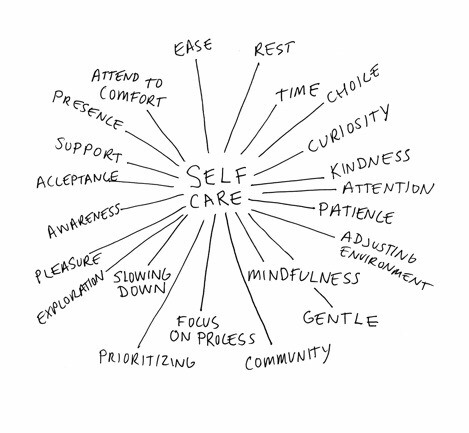
I thought I should do a little update on my self care regime/practice since my last post. In this time I've also been redefining what self care is. And a little spider diagram like this helps:
Self care is anything that in the long term is good for you, that is looking after you and your mental health. Whether you take some time away from social media, watch your favourite film, or just brew a cup of tea, self care is one of the most important aspects of ensuring your mental health remains just that - healthy.

Wednesday, 11 February 2015

That Age Old Anti-Depressant Argument

Pills don't fix everything. But for many people, it's a start.


In the Guardian today, Ranjana Srivastava raises the point that prescribing anti-depressants is often an easy way out for doctors:
"...signing a prescription for an antidepressant would take merely the flourish of my pen, and constitute decisive action. You could say that in this moment, the promise of a solution provides a glimmer of hope for the patient and therefore, a temptation for the doctor." 
It's an interesting point. And not one without merit. Last year, Peter Gotzsche claimed:
"...more than 53m(illion) prescriptions for antidepressants were issued in 2013 in England alone. This is almost the equivalent of one for every man, woman and child and constitutes a 92% increase since 2003."
It's a shocking statistic. But it's made to shock. Despite what he's saying, 1 for every man, woman and child actually doesn't work out at all that much when you consider people on anti-depressants take them DAILY and often have more than one drug at any given time.

But Gotzsche isolates the issue of medication. He views it as an industry (which is it of course), and one in which doctors want to support without consideration of what is best for their patient. He cites three main reasons for the rise in mental health related medication use:

Sunday, 8 February 2015

Chaos is what killed the dinosaurs, darling

What a lovely weekend!

My mood is on top form after the past few days. On Friday night my wonderful work/housemates and I had our belated Christmas Dinner. We hit Tippenyaki in Rathmines, an Asian themed restaurant that brings the cooking right to you. Not only were we treated to amazing dishes (I went for prawns, salmon and shrimp!) but fantastic entertainment too. I cannot recommend this place enough. And I will more than happily go with anyone who's up for it!

Sunday, 1 February 2015

The Bad Habits of Unhappy People

I do a regular read of things mental health related on the internet. It's partly for my own mental health, but mainly because I like to know what's going in the field, both in Ireland and internationally. This brings me to a lot of blogs. Some are breathtakingly poignant pieces about personal experiences that bring me to tears, some are scientific, and others, like this one, are meant as self-help guides.
Steven Aitchison is a writer and blogger on mental health and positive thinking. He believes that if you 'change your thoughts, you change your life.' He makes it sound so easy...
With contributing authors, the blog discusses all things mental health related.

What I'm interested in writing about today is how bad habits affect your happiness. Steve Roy wrote this post 'Ten Destructive Habits Unhappy People Have' on the site. The idea, is that you can class who is happy or unhappy by how they act/think. In turn, by changing these habits, you can become happy.

I decided to go through his list and try to prove that not all 'unhappy' people share the same traits. Also, I consider myself to be quiet a happy person. This is not conflicting with my depression; I believe you can be generally happy and still have depressive episodes. So here's the list:

Tuesday, 27 January 2015

Self Care: Step One

You read my post Down. You know things have been tough for me. So what's next?
Well for me, Self Care is the first step to getting my mental health back on track.

So this is an update on my Self Care regime since the New Year (not just since I pressed 'publish' on that post):

Tuesday, 20 January 2015

The Impact since my last post

It’s been a strange few days. Putting something I had bottled away for weeks out into the public domain was scary. I found it difficult to press the ‘publish’ button.

But ever since I did the outpouring of support has been immense. 

I feel more relaxed, happier even, like a weight has been lifted off of my back.
Because it's out there, I'm not preoccupied with hiding it anymore; with consciously lying every time I was asked 'How are you?'

Saturday, 17 January 2015

Down


In my Christmas post I mentioned the post Christmas period blues; the difficulty I have often had of relocating myself back to Dublin after two weeks at home.
This year was a somewhat different experience for me.

While it is very common for people to experience periods of lows and changes in mood during the winter, it's never happened to me over the 'festive' period before. But this year it did. And I didn't know how to deal with it or what was wrong with me. Despite having gone through battles like this before, I couldn't quite recognise the signs in myself until they had been going on for over a week. And the best way that I know how to deal with it is to write. So here's what happened:

Sunday, 11 January 2015

A Good Mental Health Week

Too often we reflect on the negative. Consumed by our fears, our sadness, the darkness.

But, I have had a good week. It may have been the first week back to work, and the first week in January, but the January Blues haven't hit me.
Instead, I've been happier than I have in weeks. I didn't notice until half way through the week. I was watching TV and it was funny and I started to laugh. Out loud. And that's not like me. Most of my feelings, the majority of the time, are kept locked up inside myself. I don't express, and I certainly don't do so by accident.

Tuesday, 5 August 2014

Music is what feelings sound like...

Source: Pinterest
'Music is what Feelings sound like'.
I read that online the other day, and I thought it was beautiful.
We’ve all been there; had songs that we can relate to more than we can relate to half of the people we meet. A song that describes perfectly how you’ve been feeling even though you couldn’t describe it yourself.

Music brings people together. People who have never met. People who will never meet. But they both relate to that one line in that one song by that one band. And it unites them in a powerful way.

Well, back to me.

I have always loved music. Well, kinda. I had my ‘rocker’ phase as did many a teen during secondary school. Today, I listen to a bit of everything. Tegan and Sara, Arctic Monkeys, Emeli Sandé, Joy Division and Paramore are a few of my favourites.

But my all time favourite band are The Gaslight Anthem. They’re still not widely known among the general population (despite the fact that they sell out so quickly every time they come here)! But I discovered them while watching the BBC’s coverage of Glastonbury Festival in 2009 where they were joined on stage by Bruce Springsteen (Yes- They are that cool!) The next week they were on BBC Live Lounge covering 'I Do Not Hook Up' by Kelly Clarkson, and I had found my sound. Literally anything Brian Fallon touches is gold for me, and I also listen to his other bands; The Horrible Crowes, Molly and the Zombies etc. Their new album Get Hurt is out on August 12th, and I am very, very excited.

But then there are those lyrics that in one particular moment in time just get you through.
You might have listened to the song a gazillion times before, but at that instant you hear a line that you never noticed before, or a lyric that suddenly makes sense to you now.

This blog post is about those.


I can relate.

'I can’t explain how I feel, but I can find a song that can' – I couldn’t find a quote about how it feels to relate to a song, but funnily enough I could find a song.

Pull it out, turn it up, what's your favorite song?
That's mine, I've been crying to it since I was young
I know there's someone out there feeling just how I feel
I know they're waiting up, I know they're waiting to heal
            The Gaslight Anthem, Handwritten

For this post I'm only going to look at a couple of different lyrics. These are the songs that helped me through some tough times, or some low points, or just the songs that made me feel normal.

The Gaslight Anthem

They obviously feature heavily in the list of songs that have moved me. But I’m just going to pick a couple of lines that really got to me when I was at my lowest, gave me hope, and helped me through some tough times.

I always kinda sorta wished I was someone else.
High Lonesome

I been down, I been out,
Had my head and my heart kicked around.
She Loves You

Well Things Got Bad & Things Got Worse
Half like a Blessing, Half like a curse
These Blessings so hard to see sometimes
Got a little clearer ‘bout dusk last night.
Ain’t nobody got a blessing like mine.
Red At Night

With Red at Night I started to see my depression in conflicting ways - it could have positives and negatives; ‘Half like a blessing, half like a curse’.


And in my heart I’m the weary kind
I’m much too tired to cry
Though it’s sad enough for tears
It’s been try fail try for years
And when the next year comes along
I don’t know if I’ll be home
I don’t know if I’ll survive.
Drive

Drive is my one of my favourite songs. When these lines come on I always get chills because for a long time, this was me.

Last June I saw The Gaslight Anthem in the Olympia Theatre in Dublin, and it was the best gig I have ever been at and one of the best nights I’ve ever had in general. It was also a huge step for me, as it was the first event I think I’ve attended by myself. It was an incredible experience with such a chilled out feel to the whole gig.
The Gaslight Anthem, Olympia Theatre

Tegan and Sara

Tegan and Sara are another one of those bands that just GET me. Their songs take up the majority of my 25 Most Played tracks on iTunes, and I’ve been basing a lot of my past Blog Post titles on their song lyrics. One song that really sticks out for me though is ‘My Number’, and in particular this line:

It’s a silly time to learn to swim
When you start to drown.
It's a silly time to learn to swim 
On the way down.
My Number

Source: Pinterest


Charlie Simpson’s “Parachutes”

I don't need a parachute
You don't need to ask if I'm okay
I can look after myself
We've been walking for hours now
My feet are starting to itch
Blisters crack all over my skin
And my shoes don't even fit.

I'm so sorry for the pain,
sorry for the aches,
sorry for the moods I'm swinging.
But I don't need your hand,
I don't need your heart,
I don't need a parachute.

I have tried to carry you
As far as I could go but I'm not strong
Enough to do this on my own
I pack my bags and leave this town
Cause I'm not welcome back here any more
Upon these shores.

I'm so sorry for the greed,
sorry for the hate,
sorry for the mess I left you
But I don't want it back
I don't need it back
I don't need a parachute.


I replayed this song in Summer 2011 at least one hundred times. It’s still on my Most Played Songs list on iTunes. This is the song that described my Depression to me. I was so sick of everyone treating me differently because of my mental illness. I was so sick of being a burden on other people. I hated myself and this song go it.
Source: Pinterest

That October Charlie Simpson just so happened to be playing in UCD’s Student Bar (back when we had an amazing student bar where gigs were possible). And I will forever be thankful for the wonderful girl who came with me to see him, despite her not having an interest in his music!
Charlie Simpson, UCD Student Bar


Over to you.
I know I’m not alone in having songs help me through the tough times. I want to know what song, even if it’s not the lyrics but the upbeat tune that makes a difference or you!


Tuesday, 29 July 2014

Exercise and your Mental Health

Two years ago I got somewhat addicted to exercising. I worked out multiple times a day to a set routine and pushed myself continually to exceed my goals. I even bought an exercise mat as an incentive for me to keep it up when I got back to college.

My ambition was short lived when I had my tonsils out. I spent one week recovering, followed by another week in hospital for a post-tonsillectomy bleed, and then ANOTHER week spent recovering from that.

It was difficult to get back into exercising after that. Having been unable to exercise for over 3 weeks, I lacked motivation and energy to And I have never really gotten back to that level of fitness.

Exercise became a form of therapy for me. I pushed myself day after day because it made me feel better in a lot of different ways...
  • I felt better about myself as a whole

§  As my fitness improved my body began to tone and strengthen. I was happy with the way I looked, and this in turned boosted my confidence and self-esteem. In turn, self-esteem leads to happiness and increased productivity. It's win-win.
  •          Distraction

§  Exercise was a distraction from everything else going on in my life. For 30mins at a time I didn't have to think about anything apart from my workout. All my negative thinking, anxiety about the future, regrets about the past were all put on hold, and I loved it. 
  •     Independent

§  What I love about exercising is that it’s something I can do by myself. It involves no interaction with other people (which is perfect so you can get as sweaty as you want, or put in as little effort as you want depending on your mood). 
  •          Pain

§  Part of me enjoyed the pain of exercise; pushing the limits of both my mind and my body.
  •          Relaxing

§  This one sounds a bit odd, I know. But afterwards I would sleep better, feel less stressed and generally more relaxed. It's a great after effect of exercise.
  •          Achievement

§  With every extra minute I could exercise, with every little improvement of my body, I was proud of myself. Exercise can come with a real sense of achievement.


Now, as with the years in between, I have always found something that stands in my way – college assignments, exams, work, tiredness. I let the excuses become reasons not to spend even a few minutes exercising.  But that doesn’t mean that I don’t want to. It’s an ongoing battle, but I’m hoping that a little motivation will help me get back to exercising at least a couple of times a week.

I have a new target of running a 5k come November (or at least putting in a good jogging effort)! It's a small goal that should spur me on to get back into regular exercising.


Wednesday, 23 July 2014

Now I'm All Messed Up


Recovery is all about the little things.

Over the years I have had to find little ways of coping with my Depression; my mood swings, my anxiety, my stress.

I’ve already written about the relief I’ve found from crafting, scrapbooking and being creative. When I was in secondary school I wrote little poems and verses. Now, I blog.   

But there are also a lot of other little things I have found helpful for me throughout the years.

Self-help books

I never thought I would try self-help books. In my head I thought they were cheesy and ‘hippy’. But I happened to be in the Dublin Airport Easons a couple of years ago and I saw a book on the week’s Best-sellers list that I knew I had to have.

A few weeks later I finally bought Tony Bates’ ‘Coming Through Depression’. Very simply, the book helped me to better understand my mental illness. I never fully embraced the chapters on mindfulness and I glossed over the little tasks that the book set for readers. Nonetheless, I found comfort in how a book by a leading psychiatrist could so perfectly describe how I had been feeling.

Shoot The Damn Dog’ by Sally Brampton is a memoir of living with Depression by a British journalist. It’s not a self-help book, but I decided to add it into this section as it’s the only memoir like this I have read. The book is heartbreakingly honest, and often when reading it I found myself in tears over how relatable every emotion, every anxiety she felt was. Again, it was comforting to realise that I was not alone; that other people had felt the way I was feeling, and if they could get better, so too could I.

This year I bought ‘The Feeling Good Handbook’ by Dr. David Burns. It’s a massive, massive book (and having read Ulysses in under a week I don’t use the word ‘massive’ lightly).  Dr. Burns uses CBT (Cognitive Behavioural Therapy) Techniques, which I had briefly tried before and found particularly helpful. The book also includes exercises and techniques to help you deal with distorted thinking etc. The book encourages you to track your mood and helps you to identify triggers. I had never fully welcomed a book like this before. For once, I did the exercises, but more than that I started applying them.  I began to recognise the different types of distortive thoughts I was having and challenging them; such as discounting the positive and only focusing on the negative things that were said to me.

I mentioned the book was massive right? It’s pretty much a text book. Months later and I’m still not even half-way through it. Partly this is because I’ve abandoned it while I put into practice what I’ve already learned from it. When I’m ready to move on and learn more, I’ll get back into the book. 

Book of Gratitude

I always end up getting more than one Diary around Christmas time. Whether it be as presents, or I find the perfect one and buy it myself, there is always an abundance of them in my house. This year I had my own academic diary, but I also received a 2014 diary as a present. So on New Year’s Day I decided to use one of them as a little Book of Gratitude.

I am always upset to look back at how ungrateful I can be when I’m down. Being depressed can make you self-obsessed in some ways; you look only at the NEGATIVES, YOUR failures, the world is out to get YOU...

So since January 1st I have taken time out every day to write down one thing that I’m thankful for. There have been a couple of bad days where I couldn’t think of anything to write, or a few times where I just completely forgot  – and they’ve been left blank. But every other day I have found something, no matter how big or small, to be grateful for. For example, last week while I was sick I was grateful for the hour long nap I got on the couch.

Finding one positive among a world of negative thoughts can be difficult, and there are times when I couldn’t. But this book is powerful. I read back through it and smile at the little things that bring me joy.  And I am really excited to be able to look back at it all at the end of the year.

These are but a sample of what works for me when I’m down. In future blog posts I’ll be elaborating on some more of them such as:

Exercise
Mindfulness
Music


An important part of recovery is to find what works for you. I’m a bit messed up, but there are a lot of little things I can do to find relief. 

Tuesday, 15 July 2014

What do you do with the left over you?

I thought I should do a blog post about how I told people about my Depression following my diagnosis. It’s a very, very difficult thing for anyone to share their diagnosis whether it be a mental health difficulty or for anything else. And I know that it’s something a lot of people struggle with. I know I did. It might seem like it's 'easy' for me. For someone who now openly shares their mental health experiences, it is odd to look back at the time when I tried to hide it from friends and family. While I can now talk about my mental health with confidence, not so long ago I found it difficult to even put words to it.
Hopefully by sharing with you my experiences with the people I told, and how I told them it can help anyone who is not sure about letting friends and family know.

As I discussed in an earlier blog post, a diagnosis makes your illness more ‘real’. It puts a name on how you have been feeling; you finally have a word that you can share.

Before my diagnosis I tried telling people how I had been feeling. When I initially knew that something was wrong with me (although not quite sure WHAT that was) I told a close friend who, unfortunately, immediately dismissed how I had been feeling. I had used the word ‘bipolar’ to try and make sense of my highs and lows; and they, perhaps knowing something that I didn’t, told me that I definitely wasn’t bipolar.

Others told me that everyone goes through down spells (which is true), but that it was nothing to take seriously (not so much true). My suicidal ideation they said could easily be dismissed as I was ‘too smart’ for that.

The diagnosis put my own mind at ease. But it was also a proper medical term, an illness. And that was something my family needed to know about.

That evening I told my mum that I had been to a doctor. I told her I hadn’t been feeling well lately, and the doctor sent me to a counselor straight away. They’d gotten me an appointment with a psychiatrist too, but they were sure I had Depression. The thing is, and I’m not proud of this, but I was in Dublin at the time and telling my mum was difficult. I didn’t want to ring her, so instead I text her the news. I text my mum that I had Depression, and then I went to bed and slept for what felt like the first time in weeks.

I hate that I broke the news to my family that way, I do. But it was easier for me. It was easier than a conversation over the phone whereby I would end up crying and barely get the words out. And it was easier than waiting 5 days until I was home to do it face-to-face. Instead I was cold and I was distant. It was undoubtedly hard on my mother however, and I do regret that. I nominated my mum to tell the rest of my family. And that also saved me considerable tears and pain.

In the first few months I couldn’t get the words ‘Depressed’ out without tears. It was hard for me to come to terms with what was wrong with me; even harder for me to tell others.

I was asked questions. ‘What exactly is Depression?’ ‘What does it mean?’ 'Are you on tablets?' 'Is this the same thing as people in mental homes have?'
Some people accepted it; full of a concern that has never since subsided. Some people forgot about it. In a way, I guess I am grateful. Other people I never heard from again. That is something that becomes easier over time.

There was one person that it was hardest for me to tell; my best friend Rachel. While my family had to love me unconditionally, and I was sure that they did, Rachel had a choice. She had been my best friend for years. We shared the same interests, especially music. We told each other pretty much everything to do with our families, our crushes, our lives. But I feared what telling her about my Depression would mean. I was sure I had been a bad friend. I was also sure that Rachel, being Rachel, would worry about me now, and I hated being the person that other people felt responsible for. Deep down, I also feared Rachel's rejection. Telling anyone that I had Depression over the years came with the fear that I would be rejected. I rejected myself when I didn't care for, or look after myself during my Depression. So it was natural for me to presume everyone else would reject me too.
And so I cared most about her reaction. It took me two, three months to finally sit Rachel down and explain to her what I’d been going through.

And Rachel could not have been more accepting. She told me about people she knew that had Depression. She told me she understood what I was going through. She made me feel silly for not telling her beforehand, and I did; I felt stupid for not trusting in her. My behaviour and personality change over the past months now made sense to her. But more importantly, she made me feel normal. Rachel never treated me differently over my mental health. To her, I was still the same person. Instead, she was there for me. She shared in my highs and my lows; in my journey and my recovery.

Me and my Rachel 

Today, I am used to telling people about my mental health. All of my close friends know. I have brought it up in speeches and talks. I have told students who came to me for advice and help. I have mentioned it in job interviews; two successful ones may I add. The UCD Talks video. My blog.

Most people in my life now know, yet I tend not to announce it unless it’s relevant. Through the video and my blog, people I don’t know, I haven’t met, people I haven’t seen in years know about my journey. And that’s a strange feeling. But it’s a powerful one. And it’s something I’m getting used to.